How to choose
Choosing one waterproof shell for British hill weather
Pick a waterproof from the wet days where you actually walk: Met Office rain-day counts, what BS EN 343 covers, and the fit details that end a day early.
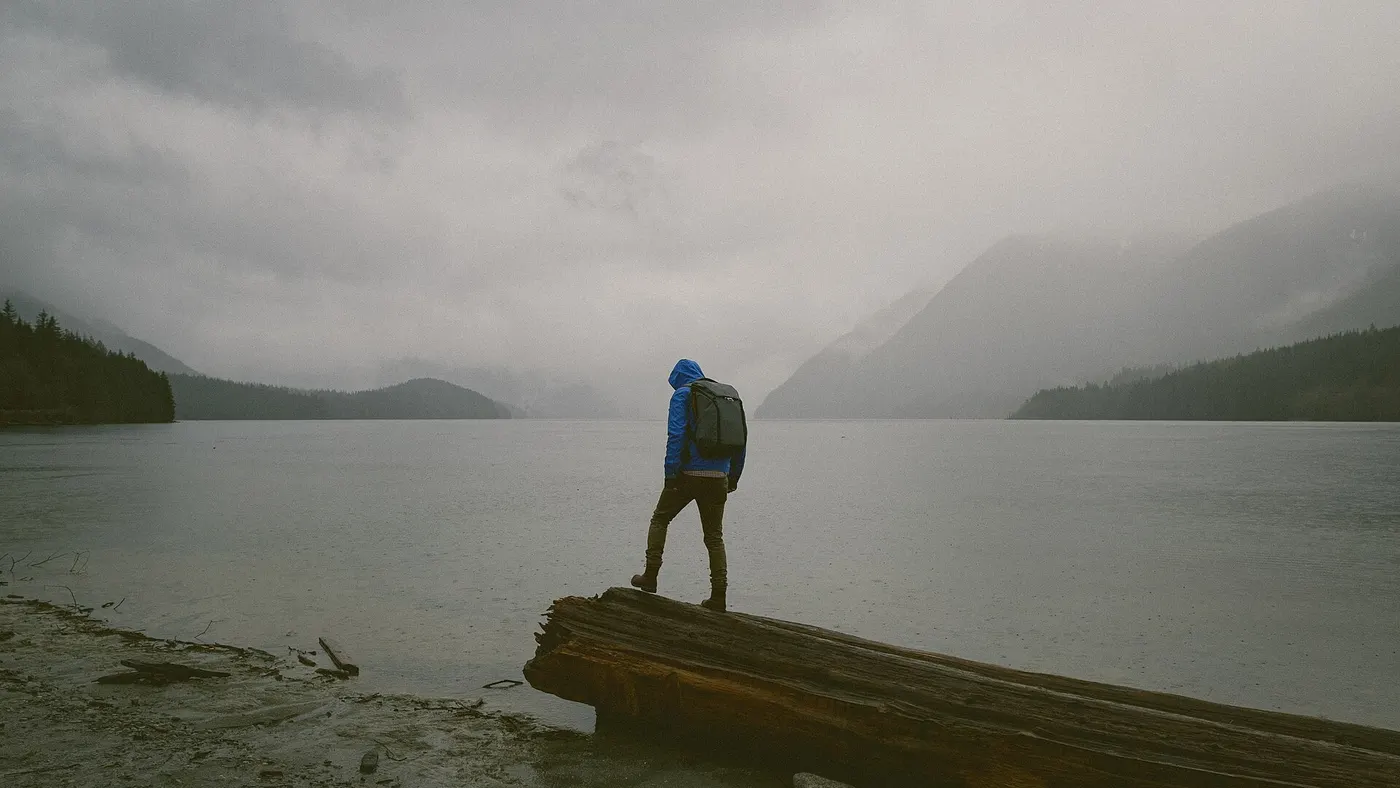
Most regretted waterproofs are bought on a single figure printed on a swing tag. The figure is usually a hydrostatic head in millimetres, and it tells you how a square of fabric behaved in a laboratory, not whether you will still be dry at the end of a wet February walk in the Peak District.
This guide works the other way round. It starts from how often it actually rains where you walk, then looks at what the published standard covers, then at the four pieces of construction that decide whether a jacket is usable in wind. Every price below is an example, labelled as one, because no live prices are connected to this site.
Count the wet days where you actually walk
The United Kingdom is not one climate, and the difference between its wet and dry ends is large enough to change which jacket is sensible. The Met Office publishes 1991-2020 long-term averages for individual stations, and two of them bracket the problem neatly. Cwmystradllyn, in the hills of north-west Wales, averages 198.59 days a year with 1 mm of rain or more. Greenwich Observatory, in east London, averages 105.59 days.
That is a difference of 93 days a year. Someone who walks mainly in Snowdonia, the Lakes or the western Highlands is buying a garment that will be worn in rain roughly twice as often as a jacket bought for the Chilterns. The practical step is to look up the station nearest the hills you actually use rather than the one nearest your house, because people buy for where they live and then walk somewhere wetter.
| Station | Annual rainfall | Days with rain of 1 mm or more | Annual sunshine |
|---|---|---|---|
| Cwmystradllyn, north-west Wales | 1,988.41 mm | 198.59 days | 1,298.71 hours |
| Greenwich Observatory, London | 562.86 mm | 105.59 days | not read for this guide |
| Difference | 1,425.55 mm | 93.00 days | - |
Both figures are published by the Met Office for the 1991-2020 averaging period. The sunshine total was read from the Cwmystradllyn page only; the Greenwich page was opened for rainfall and rain days.
What the standard covers, and what the swing tag does not
BS EN 343:2019, Protective clothing. Protection against rain, is the published British and European standard for rainwear, maintained by BSI committee PH/3. It replaced BS EN 343:2003+A1:2007 on 26 March 2019. The numeric performance classes sit inside the standard document itself rather than on the public BSI listing, so a jacket marked to EN 343 carries class numbers for water penetration and water vapour resistance that you read on the garment label, not on a web page.
Most jackets sold for walking are not placed on the market as personal protective equipment to EN 343 at all. They quote a hydrostatic head in millimetres, which is the pressure at which water pushes through a flat sample. It is a real measurement of a real property, and it says nothing about seams, zips, the hood or how the garment behaves once the fabric is dirty.
So read the tag for two things. First, whether every seam is taped, because untaped seams leak regardless of the fabric figure. Second, whether the maker publishes a care procedure, because a jacket with no published washing and reproofing instructions is one whose repellency you will not be able to restore.
| Claim on the tag | What it measures | What it does not tell you |
|---|---|---|
| Hydrostatic head in mm | Pressure a flat fabric sample resists in a laboratory | Whether seams, zips and pockets leak |
| Water vapour resistance | How hard it is for sweat vapour to escape the fabric | How you will feel walking uphill with a pack on |
| Marked to EN 343 | Tested and classified under the published rain standard | The class numbers, which are on the garment label |
| "Fully taped seams" | Every stitch line is sealed, not just the shoulders | Nothing further; this is the claim worth having |
Hood, cuffs and hem are what end a day early
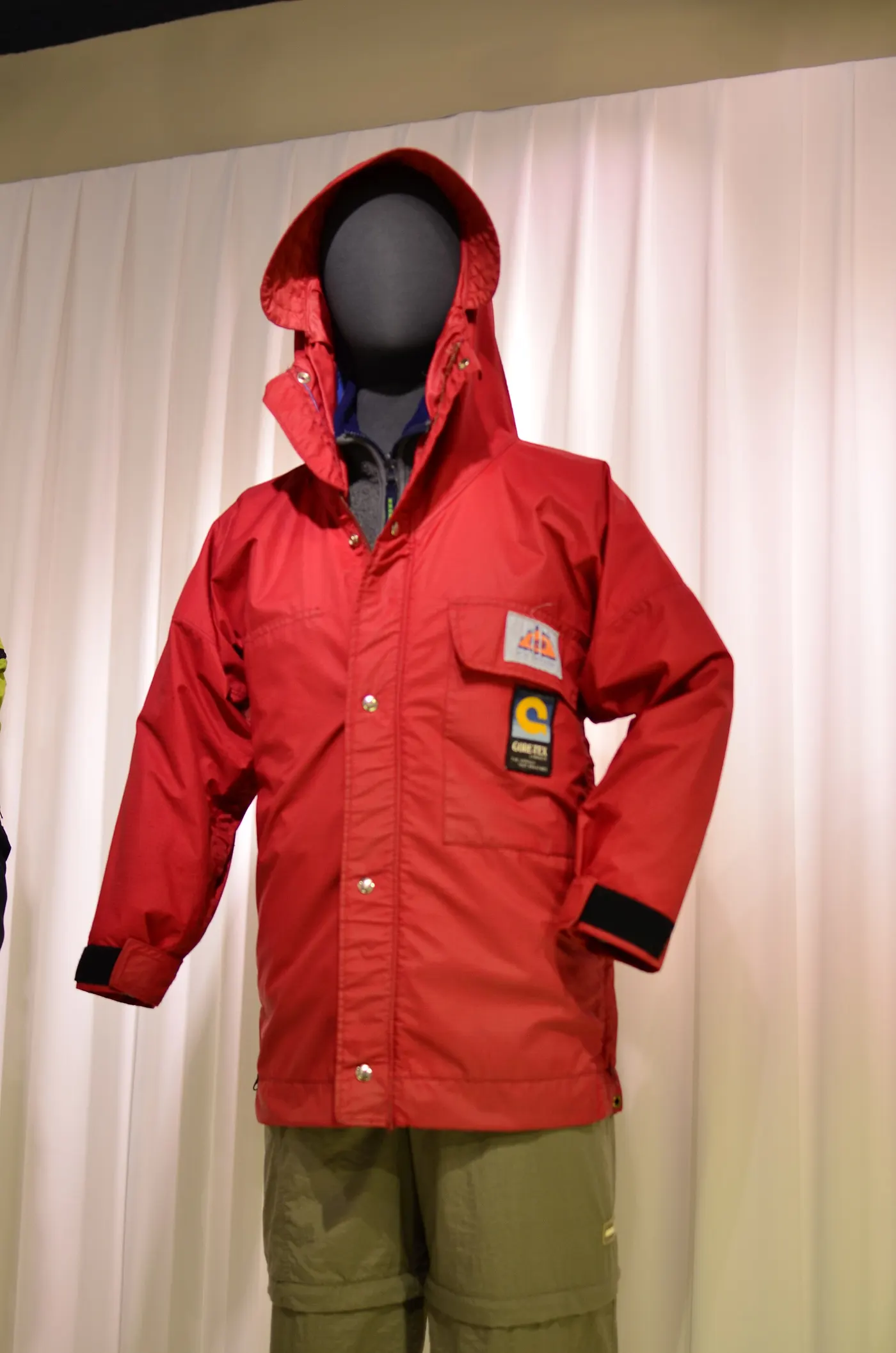
Wind is what turns a wet walk into a short one, and the three parts of a jacket that manage wind are the ones catalogue photographs rarely show. A hood that will not turn with your head means walking with rain in one eye for hours; a stiffened peak is the single feature that keeps water off your face when it is blowing horizontally.
Cuffs matter because the sleeve-to-glove join is where water gets in by running down your forearm. A cuff that closes over a glove keeps the water outside; a cuff that only closes under the glove channels it onto your wrist. The hem is the quietest of the three: a jacket that rides up when you reach above your head leaves a gap exactly where a rucksack hipbelt sits.
- Put the hood up, do up the jacket, and turn your head left and right; the hood should move with you and leave your view clear
- Check the peak is stiffened rather than soft fabric, and that it can be tightened without blocking peripheral vision
- Close a cuff over the glove you actually walk in, then raise your arm and see whether it stays closed
- Reach straight up with a loaded rucksack on; the hem should still reach below the hipbelt
- Find the hem drawcord with the pack on, one-handed, without taking the pack off
- Open every pocket while wearing the pack; chest pockets that sit under a hipbelt or sternum strap are unusable in practice
Three price bands, and what changes between them
The example bands below are planning figures, not products we are recommending and not prices we are quoting. They describe what tends to change as the price rises, which is mostly construction rather than fabric. A £80 jacket and a £320 jacket may use membranes with similar laboratory figures and differ entirely in the hood, the seam tape width and whether the zips are backed by a storm flap.
The jump that buys the most is usually from the lowest band to the middle one, because that is where fully taped seams, an adjustable stiffened hood and a two-way main zip tend to appear together. Weight is the honest trade above that: a 500 g shell and a 250 g shell can both be waterproof, and the lighter one has thinner face fabric that abrades faster against a pack and against rock.
| Example band | What usually appears | Where it falls short |
|---|---|---|
| about £80 | Waterproof fabric, taped main seams, simple hood | Soft hood peak, single-direction zip, few adjustments |
| about £180 | Fully taped seams, stiffened adjustable hood, storm flap | Heavier than the top band at similar durability |
| about £320 | Lighter fabric at similar durability, pit zips, pack-aware cut | Face fabric abrades faster if it is the lightweight version |
These are illustrative bands to structure a decision, not prices we have checked at any seller. Put your own figure into the cost-per-use calculator on this site to see what each band costs per day out.
When a waterproof is the wrong layer to buy
On a dry, windy day a hard shell is usually too much jacket. It blocks wind well, which is what you want, and it traps vapour, which is what you do not. If most of your walking happens on days with wind and no rain, a windproof softshell worn over a thin fleece will be more comfortable for more hours a year than a hard shell will.
The second case is heat. On a bright day a shell lives in the pack, where it is 300 to 500 g of insurance you carry and do not wear. That is a sensible thing to carry and a poor thing to spend £320 on if the only days it comes out are the four or five a year when the forecast turns.
The test that settles it is the one from the first section: how many of the days you are out are wet days. At 198.59 rain days a year the shell is a daily garment and worth building the rest of the system around. At 105.59 it is still essential kit, and the money is often better spent on a mid-layer and a decent hat.
Before you buy
- Look up the Met Office long-term average rain days for the hills you walk in, not for where you live
- Confirm every seam is taped, not only the shoulder and sleeve seams
- Put the hood up and turn your head; the hood should turn with you and the peak should be stiffened
- Close a cuff over the glove you own and raise your arm to see whether it holds
- Reach up with a loaded rucksack and check the hem still covers the hipbelt
- Find the manufacturer's washing and reproofing instructions before buying, not after
- Put your own price and expected days out into the cost-per-use calculator before comparing two jackets
Questions readers ask
- Is a higher hydrostatic head always better?
- No. Hydrostatic head measures pressure resistance on a flat fabric sample, and above the level needed for rain and a rucksack strap the extra figure changes little you can feel. Seam tape coverage, hood construction and zip protection decide whether you stay dry on a real hill. Two jackets with the same quoted figure can perform very differently because of those three things.
- Does a jacket marked to EN 343 mean it is better than one that is not?
- It means the jacket has been tested and classified under BS EN 343:2019, the published standard for protective clothing against rain, and that class numbers appear on its label. Many good walking jackets are not sold as protective equipment and carry no EN 343 marking at all. The marking is useful evidence of testing, not a ranking against unmarked garments.
- How long should a walking waterproof last?
- The membrane usually outlives the face fabric and the zips. With washing and reproofing as the maker specifies, 6 to 10 years of regular use is realistic for a mid-weight shell, and 3 to 4 years for the lightest fabrics carried under a heavy pack. Abrasion at the shoulders and hips, not leaking fabric, is what normally ends it.
- Do I need waterproof trousers as well?
- On the 198.59 rain-day figure above, yes, because wet legs are what cut a day short once wind picks up. On the 105.59 figure a pair kept in the pack for the handful of genuinely wet outings is usually enough. The deciding factor is wind rather than rainfall: still rain is tolerable on bare legs, driven rain is not.
Sources
- Met Office — Cwmystradllyn location-specific long-term averages, 1991-2020 — checked 2026-11-03
- Met Office — Greenwich Observatory location-specific long-term averages, 1991-2020 — checked 2026-11-03
- BSI — BS EN 343:2019, Protective clothing. Protection against rain (published 26 March 2019, committee PH/3) — checked 2026-11-03
Advertising is not enabled on this site yet. When it is, ads will be labelled and kept visually separate from the guides.